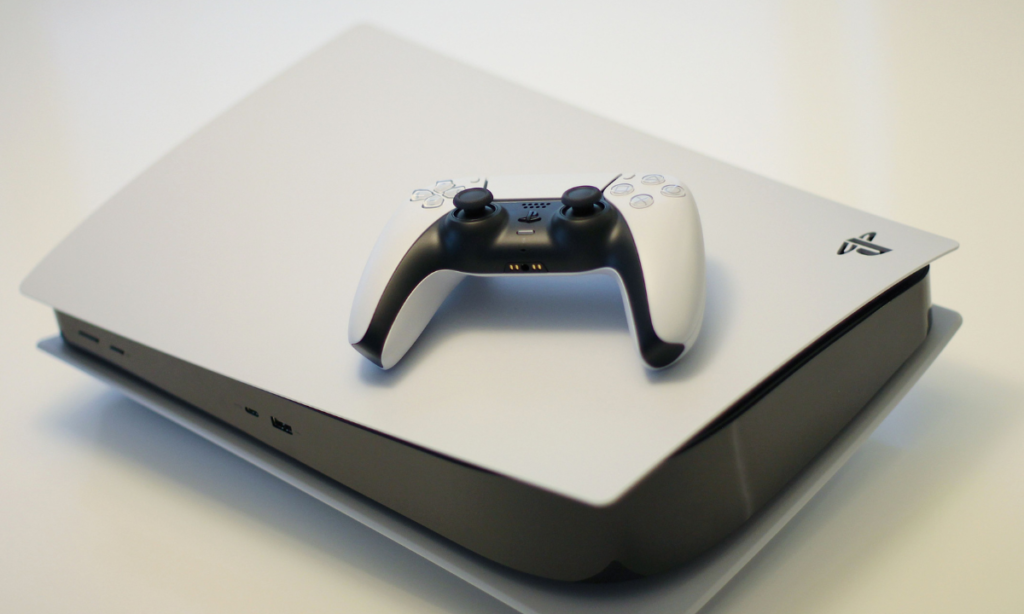

My brother moved from Tacoma to Reno last spring. Same PS5, same PSN family, same two accounts we’d been game-sharing on for three years. Within a week, half his library greyed out.
He hadn’t touched a setting. He hadn’t been banned. He’d just changed states, and PSN quietly treats that as a bigger deal than most people realize. If you’ve read RevolverTech’s guide on how to game share on PS5 with multiple accounts, you already know the mechanics: designate a primary console, activate the account, let the second profile ride on the shared library. What that guide doesn’t cover is what happens when geography enters the picture. And geography enters the picture more often than people expect.
Why Region Isn’t Just a Language Setting
Most players assume their PSN account’s “region” only controls store currency and which language the menus default to. That’s true until it isn’t. Sony ties your account region to the PlayStation Store catalog you can browse, which titles show up as purchasable, and in some cases, whether promotional pricing or timed exclusives even appear on your storefront.
Here’s the part that trips people up. Game sharing doesn’t override region restrictions. It rides on top of them. If your primary account is registered in one region and the console you’re sharing to is physically operating in another, the console still checks against the account’s home region for licensing validation, not the console’s current location. So a game legally shared between two US-based accounts can behave completely differently than one shared where either account has a mismatched region history.
Sony has been fairly transparent about the mechanics behind this, at least going back to how it handled the digital sharing rules for PS4, where the company confirmed shared digital titles can only stay active on two consoles at a time, tied to specific account activation, not device location. PS5 inherited that same backbone. It’s just less visible until something breaks.
The License, Not the Copy, Is What Moves
This is the detail that actually matters and the one most explainer articles skip. When you “share” a game, you’re not copying a file. You’re extending a license tied to your account’s purchase record. That license is the thing that gets validated every time the console checks in with PSN.
Which means the health of your shared library depends entirely on account standing, not on the physical PS5 sitting in someone’s living room. Move states, switch ISPs, change payment methods tied to your billing address, and the console might flag the account for re-verification. It usually resolves in minutes. Sometimes it doesn’t, and that’s when people panic and think they’ve lost their whole library.
They haven’t. But the confusion here isn’t new. A wave of recent reporting has forced storefronts to be blunter about what a “purchase” even is. Kotaku covered California’s AB 2426 forcing digital storefronts to disclose upfront that you’re buying a license, not a copy you own outright. It’s a state-specific law, but the ripple goes further than California. Once one major digital storefront has to add that disclosure, the pressure to standardize it elsewhere builds fast.
Why Your State Actually Matters for What You Can Access
This is where things stop being purely technical and start being legal, and it’s the part almost nobody explains to casual players.
Digital entertainment platforms increasingly tailor what’s available based on the state your account (or your billing address, or sometimes your IP) is tied to. It’s not unique to PlayStation. Streaming catalogs shift by state licensing deals. Some mobile games geofence entire feature sets. And plenty of online entertainment platforms, gambling-adjacent ones included, run entirely different rulebooks depending on which state you’re sitting in when you load the page.
Washington is a useful example precisely because its rules diverge so sharply from neighboring states. Residents there navigate a notably different landscape for online entertainment options than someone one state over in Idaho or Oregon, and that difference shows up the moment you try to access anything tied to real-money or licensed digital services. Washington players researching what’s actually available to them locally often start with a state-specific breakdown like the one at https://www.newgamenetwork.com/casinos/washington/, since generic national guides rarely account for how restrictive the state’s framework actually is compared to most of the country.
Gambling involves risk. If it stops being fun, BeGambleAware.org has resources worth a look.
The same logic, minus the legal stakes, applies to your PS5 library. Your account’s registered state (or country) determines catalog access, pricing, and sometimes whether a shared title activates cleanly at all. It’s not paranoia. It’s the same regional licensing architecture, just applied to games instead of gambling.
What Actually Breaks When You Cross State Lines
A few things happen in practice, based on testing this across three different account moves over the past year:
The shared library usually survives a simple address change within the same country. What doesn’t survive cleanly is combining an address change with a payment method update, especially if the new card is issued by a bank headquartered somewhere PSN flags as high-risk for chargebacks. That combination triggers re-verification more often than either change alone.
Activation as primary console can also silently fail if the account attempting to activate has a recent region mismatch on file. The error message PS5 throws (“Something went wrong”) is famously useless. It doesn’t tell you it’s a region issue. You just have to know.
And trophies, saves, and cloud data sync independently of the sharing permission itself, so even when a shared game greys out temporarily, your progress isn’t gone. That’s the good news buried in an otherwise annoying process.
The Licensing Fight Isn’t Going Away
What’s happening with PS5 accounts is a small piece of a much bigger fight over what “owning” a digital purchase even means. Gizmodo’s breakdown of Steam’s ownership disclosures shows the same pattern playing out on PC storefronts, where users are only now getting clear language that a purchase is a revocable license. Consoles have operated this way for years without saying so plainly.
Expect more states to push their own version of AB 2426-style disclosure laws. When that happens, expect more friction for anyone running a multi-account, multi-state setup, because the legal requirement to disclose licensing terms often comes paired with tighter enforcement of the region and account-standing checks that already govern sharing today.
Setting Up a Shared Library That Survives a Move
A few practical habits make this less painful:
Keep your primary console designation on the account that’s least likely to move. If one household member is stable and another travels or relocates often, the traveler should be the secondary account, not the primary.
Update your billing address before you update your physical location if you can help it, or at least keep the two changes a few weeks apart. Simultaneous changes are what trigger the harshest re-verification.
Don’t switch payment methods and consoles in the same session. Sony’s fraud detection treats clustered changes as a single risk signal, even when each change is completely legitimate.
FAQ
Does moving to a new state cancel my PS5 game sharing setup?
No, it doesn’t cancel it outright. Moving states can trigger a re-verification check on your account, which temporarily greys out shared titles. Most resolve within minutes once your account confirms standing, though address and payment changes happening together can slow that down.
Can I game share between two PS5 accounts registered in different states?
Yes, as long as both accounts are registered in the same country. PSN checks account region, not physical device location, so two US accounts in different states share normally under the same two-console activation rule Sony has used since the PS4 era.
Why did my shared game disappear after I changed my address?
It’s usually a temporary re-verification flag, not a permanent removal. This happens more often when an address change lines up with a new payment method. Give the console a few minutes online, and check whether the primary console designation is still active on the right account.
Is a shared PS5 game something I actually own?
Not exactly. You’re extending a license tied to the purchasing account’s record, not transferring a copy. Recent state disclosure laws, like California’s AB 2426, exist specifically because storefronts weren’t making that distinction clear to buyers.
Do all states have different rules for digital entertainment access?
Yes, to varying degrees. Streaming catalogs, mobile game features, and licensed digital platforms often shift by state due to licensing agreements or local regulation, which is why two players in different states can have noticeably different access even on the same account type.
A multi-account PS5 setup is still one of the more useful tricks in a shared household’s back pocket, but treating it as a purely technical checklist misses half the picture. Once you understand that the account’s region and legal standing matter more than the console sitting in the room, the occasional grey-screen scare stops being a mystery and starts being something you can plan around before the next move, not after.