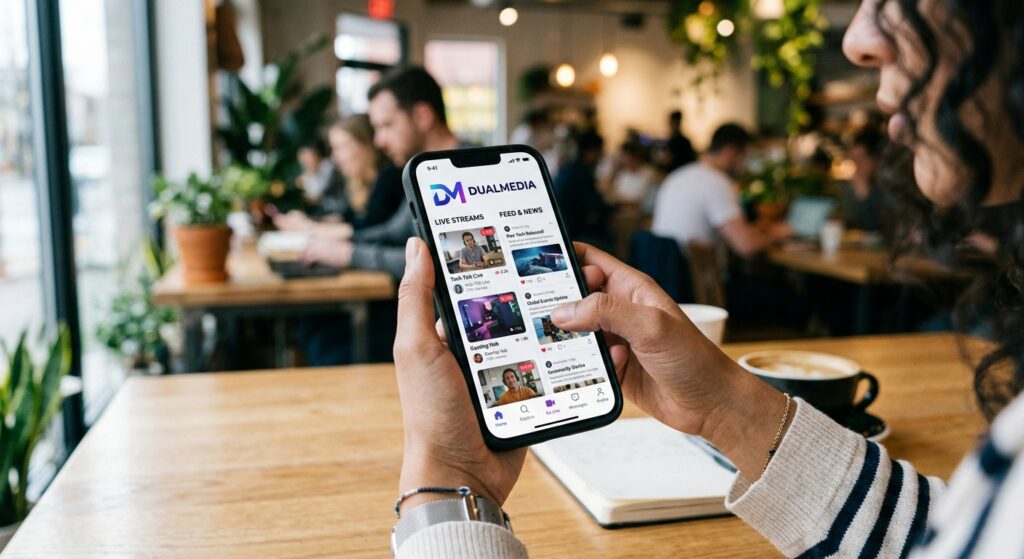

Mobile applications have become an important way for people to access information, services, entertainment, education, and business tools. As mobile experiences have developed, applications have also become capable of bringing different forms of content together, including text, images, audio, video, and interactive elements.
This is where the phrase Application mobile dualmedia can become interesting. However, the term needs some clarification. It is not a universally defined technical standard or a single type of application. Online, it is used in connection with the idea of combining different media formats in a mobile experience, while DualMedia is also the name of a Paris-based digital agency specializing in custom mobile application development and digital publishing.
What Is Application Mobile Dualmedia?
It can be understood as a mobile application that brings two or more forms of media or content into one user experience. Depending on the purpose of the application, this could involve combinations such as text and video, audio and images, or written information with interactive visual elements.
The important point is that “dualmedia” should not be treated as a fixed technical specification. Different applications can combine media in different ways. A digital publication, for example, might combine blogs, photographs, videos, and interactive content, while an educational application might combine written lessons, audio explanations, diagrams, and quizzes.
Understanding the Concept of Dualmedia
The basic idea behind dual media is simple: instead of depending on one content format, an application can use different types of media to communicate information or provide functionality.
For example, text can explain an idea in detail, while an image can provide visual context. A video can demonstrate a process, and audio can provide another way to consume information. Interactive elements can then allow users to explore the content themselves.
What Makes a Mobile Application Dualmedia?
There is no single official checklist that makes an application “dualmedia.” In practical terms, the concept is most useful when an application deliberately integrates different media or content types into the same experience.
Consider an educational application. It might present a written explanation, followed by a video demonstration and an interactive exercise. A digital magazine could combine with photography, audio, video, and interactive graphics.
The defining idea is therefore integration. The different media elements should support the application’s purpose rather than simply being placed together.
How Application Mobile Dualmedia Differs From Traditional Apps
It is important not to exaggerate the difference between a dual media application and a traditional mobile app. Modern mobile applications can already support multimedia, and many conventional apps include video, audio, images, animations, and interactive content.
A simple application may focus on one primary task, such as checking information or completing a transaction. A multimedia-oriented application may place greater emphasis on combining different content formats as part of that task.
Android, for example, provides specific guidance for media applications and responsive layouts that allow users to browse content while the media is playing.
How Does Application Mobile Dualmedia Work?
The way an Application mobile dual media works depends on what it is designed to accomplish. Developers may need to combine a user interface, media components, data storage, network services, and platform-specific capabilities.
A well-structured application also needs an architecture that can remain maintainable as its features grow. Android’s architecture guidance emphasizes separation of responsibilities, scalable design, and application structures that can support changing device configurations and user requirements.
Combining Different Types of Digital Media
The first step is deciding which media formats are actually useful. A publishing application could combine written blogs, photographs, video, audio, and interactive elements. An educational application could combine text, illustrations, recorded explanations, and interactive exercises.
DualMedia’s published digital-publishing services demonstrate real examples of combining media formats, including videos, music, animations, 360-degree images, 3D objects, augmented reality, and HTML5 modules.
Delivering Interactive Content on Mobile Devices
Mobile applications can respond to taps, gestures, orientation changes, keyboard input, stylus interaction, and other device capabilities.
Modern Android adaptive-app guidance recommends supporting different display sizes, resizable windows, portrait and landscape orientations, foldable devices, and alternative input methods such as keyboards, mice, and styluses.
This is particularly relevant when an application contains multiple types of media because the interface needs to remain usable as the available screen space changes.
Creating a Seamless User Experience
The goal of combining media should be to make the experience easier or more useful. A user should be able to understand where to find information, how to start or stop media, and how to move between related pieces of content without unnecessary confusion.
Apple’s accessibility guidance emphasizes familiar and consistent interactions and recommends that information should not depend on only one sensory method.
The Role of Mobile Technology and Connectivity
Many rich mobile experiences depend on network connections for streaming, synchronization, remote content, notifications, or online services.
However, developers also need to consider what happens when connectivity is slow or unavailable. A well-designed application should handle network limitations gracefully rather than assuming that users always have a fast connection.
Android’s current app-quality guidance also includes networking, performance, battery behavior, privacy, and security as parts of overall application quality.
Key Features of Application Mobile Dualmedia
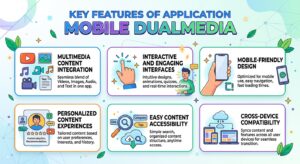
The features of an Application mobile dual media will vary according to its purpose. Nevertheless, several capabilities are particularly relevant to multimedia-oriented mobile experiences.
Multimedia Content Integration
The most obvious characteristic is the ability to present different media formats within one application. These may include written content, photographs, audio, video, animations, interactive graphics, or other digital elements. The combination should be based on what helps users accomplish their goals.
Interactive and Engaging Interfaces
A multimedia application can allow users to interact with content rather than simply read or watch it. Interaction can include navigation controls, expandable information, touch-based elements, media controls, or other application-specific functions. The interface should remain predictable and understandable.
Mobile-Friendly Design
A mobile application needs to work within the limitations and possibilities of different screens. Android’s adaptive-app guidance recommends layouts that respond to available window size, including phones, tablets, foldables, and other form factors.
Personalized Content Experiences
Some mobile applications can personalize what users see based on their preferences, activity, or other information. However, personalization is not an automatic feature of every dual media application. If an application collects personal information for personalization, developers need to consider privacy, transparency, permissions, and responsible data handling. Android recommends minimizing unnecessary permissions and data access.
Easy Content Accessibility
Accessibility should be considered from the beginning of application design. Apple explains that accessible interfaces should allow people to perceive and interact with content through different capabilities, while Android provides specific quality requirements around touch targets, contrast, and content descriptions.
Cross-Device Compatibility
A modern application may need to support more than a standard smartphone screen. Android’s adaptive-app documentation covers phones, tablets, foldables, desktops, car displays, and other environments, with layouts designed to adapt to available space.
Benefits of Application Mobile Dualmedia
Combining media formats can provide advantages when the different elements have a meaningful role in the overall experience.
Improves User Engagement
Different media formats can give users different ways to interact with information. For example, someone may prefer reading a detailed explanation, while another user may benefit from a video demonstration or audio explanation. The important factor is relevance rather than simply adding more content.
Creates Richer Digital Experiences
Combining text, images, audio, video, and interactive elements can create a more varied experience than relying on one format alone. Real-world digital-publishing services demonstrate how mobile content can combine video, music, animations, 3D objects, 360-degree images, and augmented-reality elements.
Makes Content Easier to Consume
Different media formats can support different ways of consuming information. For example, a written explanation can provide detailed information while a video can demonstrate how something works. Accessible design can make these choices particularly valuable because users should not be forced to depend on one sensory method.
Supports Better Communication
Businesses, publishers, educators, and other organizations can use multiple media formats to communicate information in ways that match the subject. A product presentation might use images to show appearance, text to provide specifications, and video to demonstrate how the product works.
Provides Greater Flexibility
A multi-format application can provide users with different ways to explore the same subject. This flexibility can be especially useful when an application serves audiences with different preferences, devices, or accessibility needs.
Creates Opportunities for Businesses
Businesses can use mobile applications for customer services, product information, e-commerce, publishing, marketing, and internal workflows. DualMedia’s own website lists mobile development work across areas including e-commerce, media, events, photography, business applications, and digital publishing.
Common Uses of Application Mobile Dualmedia
The concept can apply to many different types of mobile experiences.
Entertainment and Digital Media
Entertainment applications can combine video, audio, images, text, and interactive controls. Android provides dedicated guidance for media applications, including layouts that support browsing content while the media is playing.
Education and E-Learning
Education is another natural use case for multimedia applications. An educational app could combine written lessons with diagrams, video demonstrations, audio explanations, and interactive activities. Each format can serve a different instructional purpose.
Marketing and Advertising
Businesses can use multimedia mobile experiences to present products, campaigns, services, and brand information. For example, a campaign might combine product images, written information, demonstration videos, and interactive calls to action.
News and Publishing
Digital publishing is a particularly relevant example. DualMedia describes digital-publishing solutions involving smartphones and tablets and lists capabilities including interactive content, videos, music, 360-degree images, 3D objects, and augmented reality.
E-Commerce and Retail
Retail applications can combine product photography, descriptions, specifications, demonstrations, and purchasing functionality. DualMedia identifies e-commerce among the sectors for which it develops mobile applications.
Business and Customer Communication
Mobile applications can also support professional workflows and customer-facing services. DualMedia describes custom business applications as well as mobile development for sales and maintenance-related use cases.
How Businesses Can Benefit From Application Mobile Dual media
For a business, the value of an Application mobile dualmedia depends on whether combining media solves a real communication or usability problem.
Reaching Mobile-First Audiences
A mobile application can provide a direct channel for customers and employees using smartphones and tablets. The application should nevertheless be designed around the target users rather than simply replicating a desktop experience on a smaller screen.
Increasing Customer Interaction
Interactive content can give customers more ways to explore products, services, or information. The most useful interactions are those that help users understand something, complete a task, or make a decision.
Supporting Digital Marketing Campaigns
Mobile applications can support branded content and campaigns by bringing media, product information, and interactive experiences together. Businesses should define the objective first, however. Multimedia should support the campaign rather than become an unnecessary collection of visual effects.
Strengthening Brand Experiences
A consistent interface can help businesses provide a recognizable digital experience. Apple’s design principles emphasize clarity, deference to content, depth, and consistency as important considerations when designing application experiences.
Delivering More Engaging Product Information
Some products are easier to understand when users can see them in action. A business could combine photographs, specifications, written descriptions, and demonstration videos to give customers more complete information.
Application Mobile Dualmedia vs. Traditional Mobile Applications
The difference between these two approaches should not be overstated. Many traditional mobile applications already use multimedia.
Differences in Content
A conventional app may focus primarily on a particular task, while a dualmedia-oriented application may place greater emphasis on combining several content formats. A multimedia application can allow users to move between different forms of content as part of the same workflow.
Multimedia Capabilities
Modern mobile platforms already provide extensive support for multimedia. Android, for example, has dedicated guidance for building media applications and adapting media experiences to larger screens.
User Experience and Accessibility
Regardless of the application category, the interface should remain understandable and accessible. Apple recommends intuitive, perceivable, and adaptable interfaces, while Android includes accessibility requirements covering touch targets, contrast, and content descriptions.
Which Approach Is More Suitable?
There is no universal answer. A simple application may be better when users need one focused function. A multimedia-oriented application may be more appropriate when different media formats genuinely help users understand information or complete tasks.
Read more: Problem on Llekomiss Software: Causes, Fixes & Troubleshooting Guide
What to Consider Before Using Application Mobile Dual media
Before developing or adopting an Application mobile dualmedia, businesses should focus on requirements rather than features alone.
Target Audience and User Needs
Start by identifying the intended users and the problems the application needs to solve. The audience should influence the application’s content formats, navigation, accessibility, device support, and overall design.
Application Performance
Video, audio, high-resolution images, and interactive features can create additional technical demands. Android’s app-quality guidance specifically addresses performance-related areas such as networking, battery use, and overall application behavior.
Device and Platform Compatibility
Different devices provide different screen sizes, orientations, and input methods. Android’s adaptive-app guidance recommends designing for different form factors and window sizes instead of assuming that one fixed layout will work everywhere.
Security and Privacy
Privacy and security should be considered during development rather than added as an afterthought. Android recommends minimizing permissions and data access, protecting sensitive information, and using appropriate security practices.
Content Management
A multimedia application can require regular updates to its content. Businesses should determine who will manage content, images, videos, audio, and other material and how outdated content will be replaced.
Development and Maintenance Costs
More functionality can mean additional development, testing, content production, maintenance, and support. DualMedia describes mobile application development as a technical partnership that can continue for months or longer as a project develops.
Challenges of Application Mobile Dualmedia
A multi-format application can be useful, but it also introduces challenges.
Technical and Development Challenges
Applications that combine several features can become more complicated to build and test. A structured architecture can help developers keep different responsibilities organized as the application grows. Android’s architecture guidance recommends maintainable structures and clear separation of responsibilities.
Managing Multiple Media Formats
Different media types can have different requirements for storage, playback, processing, and presentation. Developers therefore need to plan how each format will be delivered and how the different elements will work together.
Performance and Storage Requirements
Large video, audio, image, and animation files can affect storage and network usage. Applications need to be tested under realistic conditions, including different network speeds and device capabilities.
Keeping Content Updated
An application can become less useful if its content becomes outdated. A clear publishing and content-management process is therefore important for applications that depend on frequently changing information.
Protecting User Data
Depending on its functionality, an application may request access to location, photos, files, audio, accounts, or other sensitive information. Android recommends requesting only the permissions necessary for the application’s current use case and clearly explaining why sensitive permissions are needed.
The Future of Application Mobile Dualmedia
The future of Application mobile dual media is best considered as part of the broader development of mobile, multimedia, adaptive, and accessible applications.
Growth of Mobile-First Experiences
Mobile applications increasingly need to work across a variety of screen sizes and device types. Android’s current adaptive-app documentation covers phones, tablets, foldables, desktops, car displays, and other form factors.
AI-Powered Personalization
AI can potentially help applications personalize content, organize information, or provide more responsive experiences. However, AI is not a defining requirement of dualmedia applications. Where AI systems process personal information, privacy and responsible data handling remain important considerations.
More Interactive Multimedia Content
Mobile applications can continue to incorporate richer forms of content as device capabilities and development tools evolve. DualMedia’s existing digital-publishing work already demonstrates combinations of video, music, interactive animations, 3D objects, 360-degree images, and augmented reality.
Emerging Mobile Technologies
Foldable devices, large screens, multi-window environments, and new input methods are changing mobile interface requirements. Android’s adaptive-app guidance specifically recommends designing applications that can respond to different screen configurations and input methods.
Changing Expectations of Mobile Users
Users increasingly expect applications to be easy to navigate, adaptable, accessible, and reliable. Both Android and Apple emphasize adaptive interfaces and accessibility as important aspects of high-quality application experiences.
Is Application Mobile Dualmedia Worth Considering?
An Application mobile dual media can be worth considering when multiple media formats provide a clear advantage to users.
Who Can Benefit From It?
Potential users include publishers, educators, media organizations, retailers, marketers, entertainment providers, and businesses that need to present information through several formats. DualMedia’s documented work includes sectors such as e-commerce, media, events, photography, business applications, and digital publishing.
When Does It Make Sense?
The approach makes sense when multimedia improves understanding, communication, interaction, or access to information. For example, a product demonstration may be more useful as a video than as text alone. Similarly, an educational concept may benefit from a combination of written explanations, diagrams, audio, and interactive activities.
What Should Businesses and Developers Evaluate First?
Before developing an application, evaluate:
- The needs of the target audience
- Which media formats genuinely provide value
- Supported devices and operating systems
- Performance and network requirements
- Accessibility requirements
- Privacy and security
- Content-management needs
- Development and maintenance resources
This process helps ensure that multimedia serves a real purpose instead of simply increasing the application’s complexity.
Final Verdict
Application mobile dualmedia is best understood as a descriptive concept rather than a universally standardized category of mobile software. In a practical context, it can describe a mobile experience that combines different forms of media or interactive content within one application.
The concept becomes useful when each media format has a clear purpose. Text can provide detailed information, images can offer visual context, video can demonstrate a process, audio can provide another way to consume information, and interactive elements can help users explore content.
At the same time, adding multimedia introduces responsibilities. Developers need to consider performance, device compatibility, accessibility, privacy, security, content management, and ongoing maintenance. Official Android guidance covers these areas extensively, while Apple’s accessibility guidance emphasizes interfaces that are intuitive, perceivable, and adaptable.
FAQs About Application Mobile Dualmedia
What is Application Mobile Dualmedia?
It is best understood as a description of a mobile experience that combines multiple media formats or interactive content. It is not clearly established as one standardized technology or one universally recognized application.
What are the main features of it?
Depending on the application, features can include multimedia integration, interactive interfaces, adaptive layouts, accessible content, and support for different devices. The exact features depend on the application’s purpose and implementation.
What are the benefits of Application Mobile Dual media?
A well-designed multi-format application can provide richer ways to present information and interact with content. Its value depends on whether the different media formats make the experience more useful for the intended audience.
Where is Application Mobile Dual media used?
Potential uses include digital publishing, education, entertainment, marketing, e-commerce, and business applications. DualMedia’s documented services include mobile publishing, e-commerce, media, events, photography, and business applications.
Is Application Mobile Dualmedia useful for businesses?
It can be useful when combining media helps a business communicate with customers, explain products, publish information, or support professional workflows. The suitability depends on the organization’s goals and users.
What should you consider before using a Dualmedia mobile application?
Consider the target audience, usability, device compatibility, performance, accessibility, privacy, security, content management, and long-term maintenance. Android’s official guidance specifically emphasizes application quality, adaptive design, privacy, security, and accessibility.